Science-based journalism for democracy

About

FACTA is an independent Italian non-profit media outlet that applies the scientific method to investigative and data journalism. Our mission is to promote democracy through science-based investigations. We work in Italy, a country with enormous political, environmental, and social issues. We publish in Italian and English, often in syndication with other Italian media. We strongly believe rigorous, transparent, open science, public interest journalism can help better inform the public debate and build scientific citizenship.

Learn more

Our latest articles

Behind the Labels: Fashion Brands Meet Half of Their Green Pledges

24.11.2025
Over the last 20 years, global textile production has doubled. Along with this ballooning industry, its environmental impacts are facing increasing attention…
Schacht K., Violato A., Boscolo M.

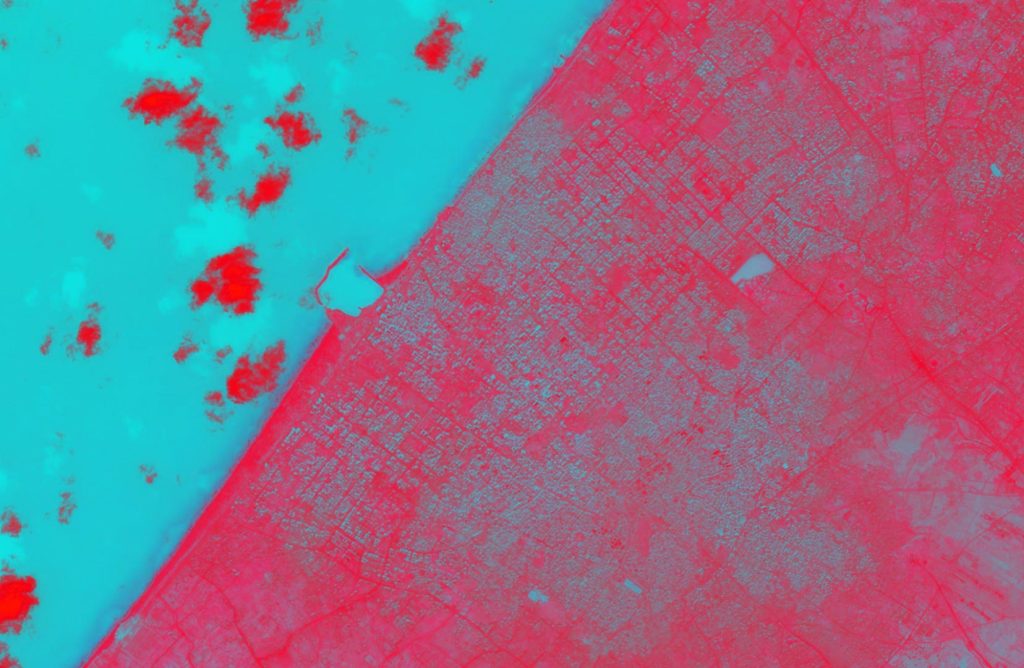
A war on the Biosphere in Gaza

17.10.2025
In October 2025, we published in Italian the following article here on FACTA, in collaboration with IrpiMedia, presenting data and studies on the widespread…
Tola E.

An audacious idea: granting legal rights as a subject to Lake Garda

9.10.2025
At our café table, we ask Viola: “If Lake Garda gains legal personhood, does that mean it can take someone to court? Or take to court those who fail to protect it?
Boscolo M., Pagni B., Tola E.

At what cost? The loss of nature risks becoming irreversible

7.10.2025
The data as a whole are alarming, and they cast a very different light on all those commitments that, on paper, were made to steer at least Europe toward a model of development that is more respectful of the environment, and of our relationship with nature, which we continue to think of as something we are not part of.
Boscolo M., Pagni B., Tola E.

Green to Grey. On Lake Garda, where tourism and concrete are devouring nature

1.10.2025
There is only one connection between Largo Goethe and Piazza Castello: the drawbridge built at the end of the 13th century by the Della Scala family of Verona…
Boscolo M., Pagni B., Tola E.

Rimini’s response to sea level rise

19.09.2025
Faced with the threat of rising sea levels and extreme weather events, Rimini is rethinking its waterfront: green infrastructure, new sewage strategies and nature-based solutions to protect the territory and community
Boscolo M., Tola E.

“After the water”: fighting the mud and invisible wounds

31.03.2025
"With the mud it’s a losing battle. It wins. It always wins. It becomes like cement and it’s impossible to remove it". This is Francesca Placci, a young woman…
Boscolo M., Centioni S.

PFAS: Clean up, restore, ban?

20.02.2025
PFAS pollution is an “invisible violence” with enormous damage to the environment and health. And cleaning up a site contaminated by PFAS is not easy at all.
Boscolo M., Tola E.

PFAS: the heavy bill citizens paid to have clean water in the Vicenza area

14.02.2025
The data Massimo Carmagnani shared with us is not secret—on the contrary, it is public and filed with the court. And it is very clear..
Tola E., Boscolo M.

Maristanis, the incomplete: the park that never was, between wind farms and pesticides  

7.10.2024
However, pollution and energy projects threaten the health of this territory, putting what remains after a century of land reclamation and the expansion of industrial agriculture at risk.
Angius R., Carboni A.
More articles

Our latest Projects & Investigations
FACTA Lab: Environment Uncovered
The first FACTA training programme bringing together journalism, science and civil society The first edition of FACTA Lab: Environment Uncovered is now open: a free training programme designed to help participants…

FACTA Lab: Environment Uncovered

Ecocide
For fifty years, "ecocide" has lacked a clear legal definition. The word entered public discussion in the 1970s, introduced by biologist Arthur Galston. The term was later adopted by Swedish Prime Minister Olof Palme in…

Ecocide

Paludi
FACTA newsletter on Italy's most mistreated and precious natural resources

Paludi

Beyond the Hem: Fashion and Sustainability
From luxury to fast fashion, Europe's clothing giants have spent the past decade filling their sustainability reports with pledges: recycled fibres, "green" materials, reduced emissions, sustainable cotton. But our…

Beyond the Hem: Fashion and Sustainability

Green to Grey
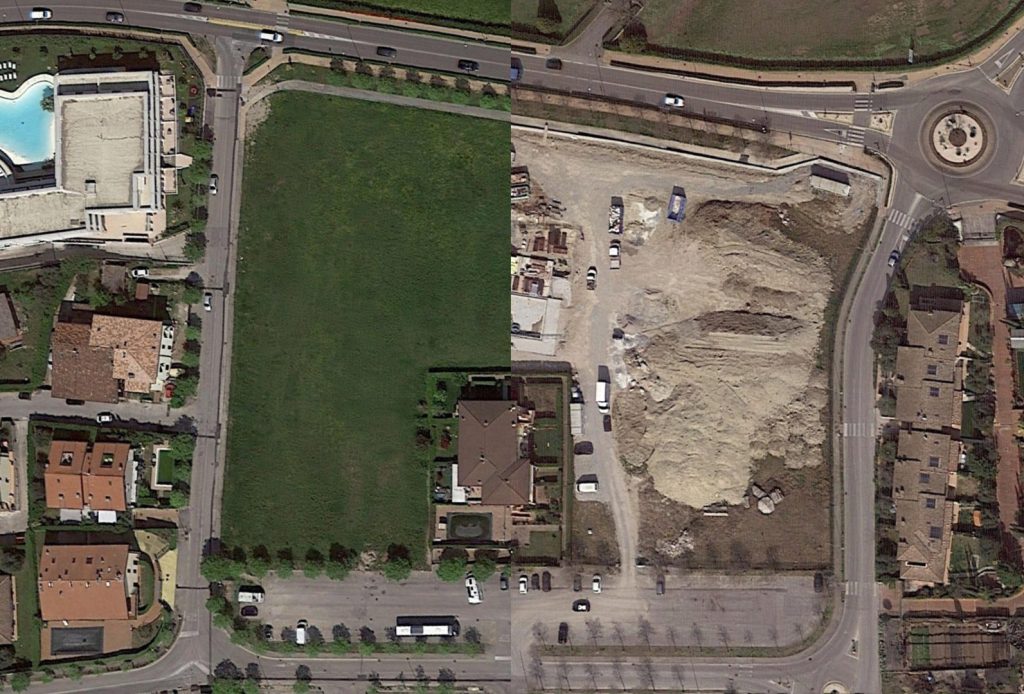
Europe is moving from green to grey at a fast pace. It is constantly losing fragments of nature, destroying entire ecosystems, and reducing its biodiversity. Every year, 1,500 square kilometres of natural or agricultural land are converted into built-up areas.

Green to Grey

#ProtectJournalistInGaza #LetReportersIntoGaza
RSF and Avaaz launch international media operation: “At the rate journalists are being killed in Gaza by the Israeli army, there will soon be no one left to keep you informed” Hundreds of media outlets, brought together…

#ProtectJournalistInGaza #LetReportersIntoGaza

mappa faenza negativo
Flooded
The floods have left deep marks not only on the territory but also on people. In addition to material damage, the psychological and emotional consequences have been significant.

Flooded

lobbyng cover
Forever Lobbying Project
What is the hidden price of PFAS pollution? This cross-border investigation reveals that PFAS remediation across Europe could cost up to €2 trillion over a 20-year period. We exposed the real cost of the “forever…

Forever Lobbying Project

More investigations
 focus on

SWAMPOWER

Unveiling the threads endangering Mediterranean wetlands
Explore the research

We apply the scientific method to
investigative and data journalism.

This means a solid, data-driven methodology for journalistic work, involving experts and researchers throughout all phases of the investigations, with clear agreements ensuring mutual independence. It also means collecting needs from the involved communities along the way.


1.

Clear hypothesis

Guided by experts and scientists, the needs of local communities, relevant literature, and public discourse, we formulate clear and explicit hypotheses to be tested.

2.

Data and literature

The investigation begins: we search for literature reviews, relevant publications and reports, open and public data, and original or citizens’ science experiments.

3.

Field reporting

We go into the field to collect stories and experiences, with particular attention to how local communities deal with problems and the solutions they test.

4.

Feedback

At every stage of the investigation, we seek feedback from experts across scientific disciplines on our hypotheses, process, data, and results, while safeguarding editorial independence.

5.

Final publication

In syndication with other media, we publish our investigations in an innovative format, experimenting with data, visualisation and multimedia.
crossmenuarrow-left-circlearrow-right-circle